
From 9 to 11 May 2019, Center for Knowledge Co-creation and Development Research (CKC) in collaboration with the Institute of Social Science of the Central Region (ISSCR) held a workshop “Promoting Dialogical Social Impact Assessment and Gender Impact Assessment for Sustainable Hydropower Development in the Vietnam Central and Central Highlands”. The workshop was initiated by three Australian Government Scholars alumni in Vietnam (Australia Awards Vietnam) and was funded by the Australian Government through the Australian Alumni Support Fund. The workshop was taken place at the Meeting Hall of ISSCR, Da Nang City.
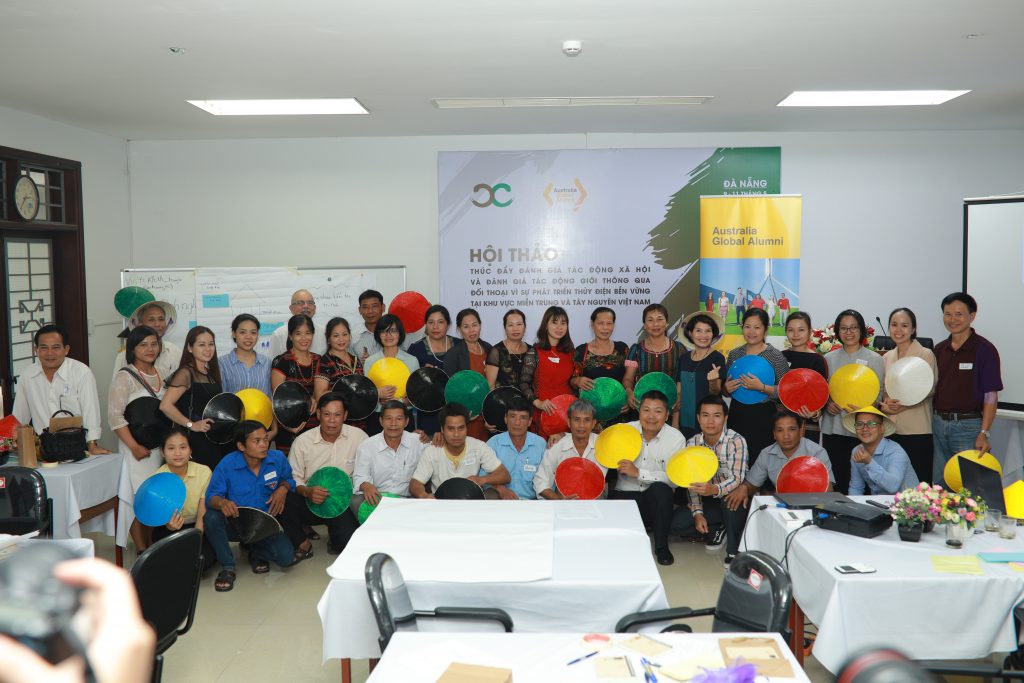
For more than ten years, the Center for Social Research and Development (CSRD) has worked with development partners and hydro-affected communities in Central and Central Highlands of Vietnam to promote social and gender impact assessments to create positive changes for people and stakeholders. Center for Development Research and Knowledge Creation (CKC) using the research results of CSRD continues to promote the implementation of dialogue models between stakeholders in social impact assessment and gender. This workshop aims to promote cooperation dialogues among stakeholders to assess social impacts and gender impacts in hydropower development and strengthen support for sustainable development of disadvantaged communities in this region. Lateral thinking, social impact assessment and gender impact assessment were the main contents of the conference.
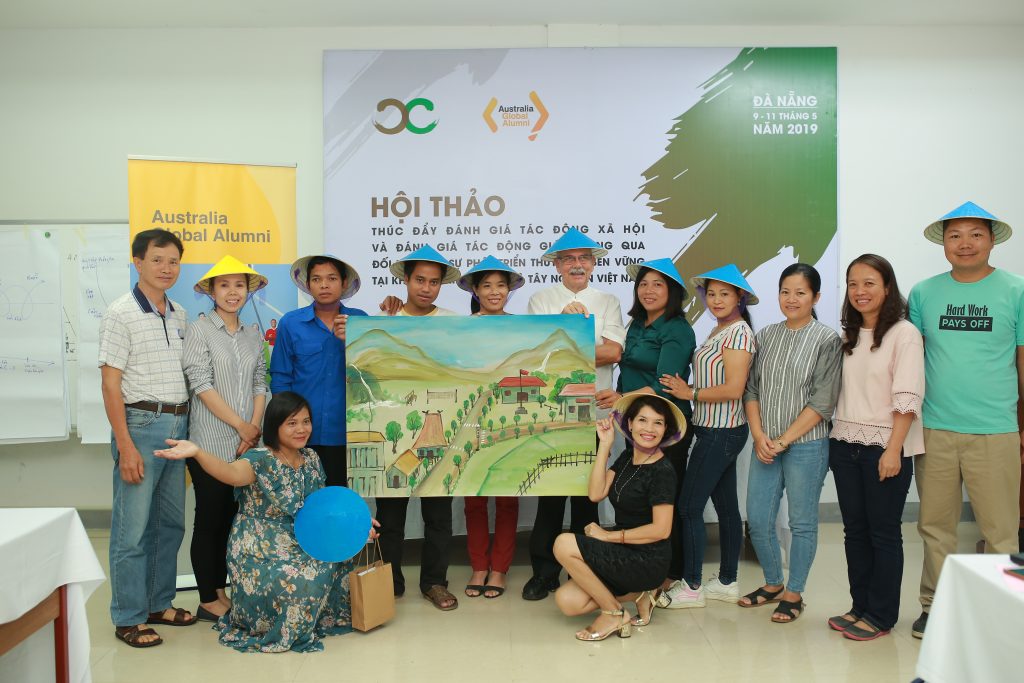
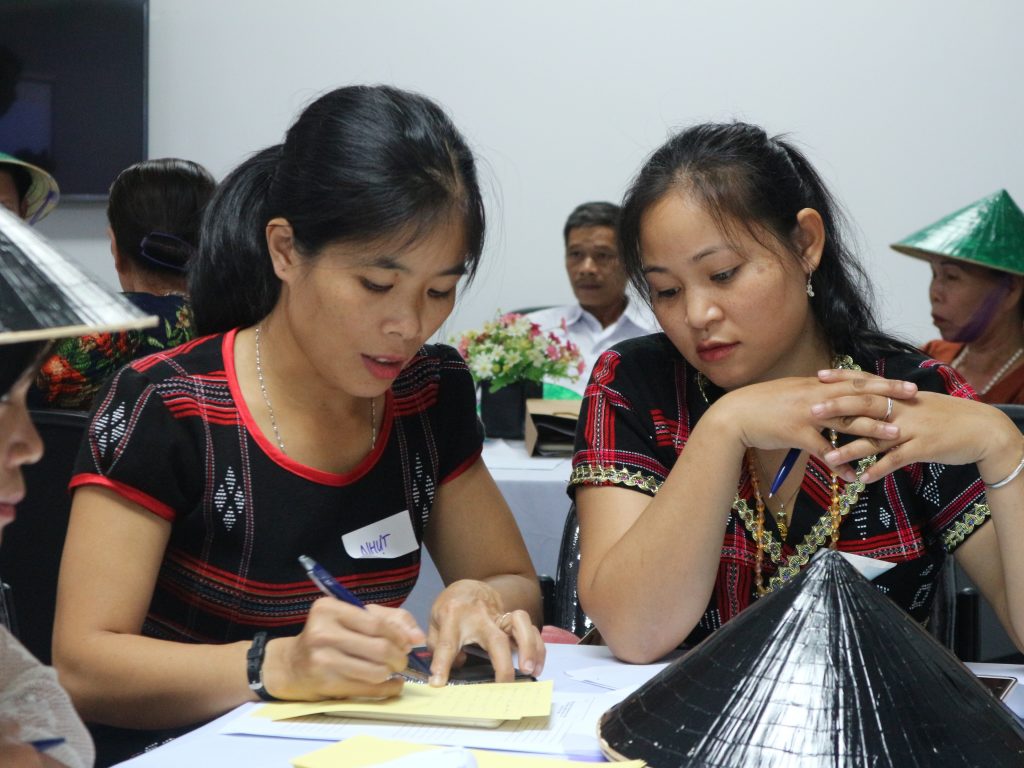
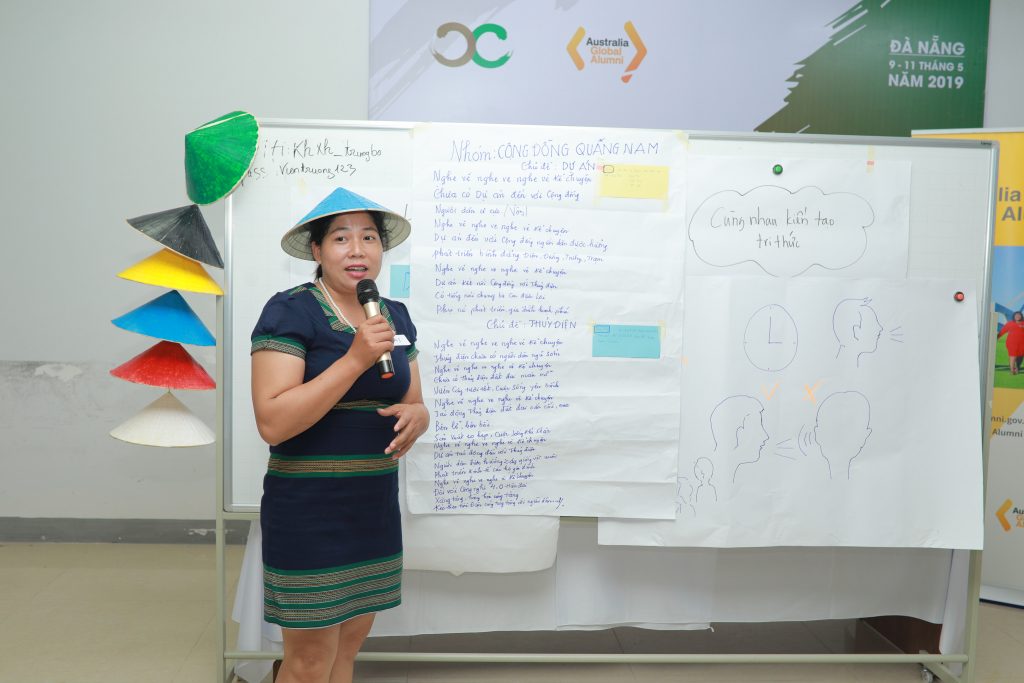
Assoc Prof Dr Ho Viet Hanh (President of ISSCR), in his opening speech, praised the significance of the workshop in making efforts to include different stakeholders in hydropower development in the region. The workshop was led by Dr Nguyen Quy Hanh – an Australian alumni and expert in impact assessment and development studies who has many years of working experience with hydropower-affected communities in the Central and Central Highlands Vietnam.
The conference attracted the participation of 40 representatives from the Central and Central Highlands Vietnam. The sharing, contribution and discussion of stakeholders in the Workshop provided a data source for CKC to develop and publish a publication entitled “Hydropower dialogues: Open mind, Open heart, Open Will” (Dialogue on hydropower: Expanding intellect, soul and action). The results of the workshop include recommendations to help develop future hydropower policies in the direction of promoting sustainable development of affected communities.
Research presented at the Vietnam National Alumni Conference: Celebrating 40 years of Australia-Vietnam Diplomatic Relations: Education for Development: Future Collaboration and Directions, Hanoi, Vietnam 14-15 December 2013.
Agribusinesses are playing an increasingly important role in agricultural knowledge production and use. It encompasses agricultural production, processing and distribution, including seed supply, agrichemicals and farm machinery, and it impacts on all types of enterprises including farms and retail stores, reaching deep into rural areas However the agricultural innovation system in Vietnam has often been conceptualised as outside the mainstream science system and the extension system. Because of this, the innovation capacity of other actors in the agricultural sector – including agribusinesses – is often neglected.
This research investigates the role of private agribusiness in knowledge production and diffusion in the Mekong Delta, the largest and most active region for agricultural production in Vietnam. Data for this analysis was collected during one-year of field research in the Mekong Delta in April 2010-2011, and is part of a larger study implemented under the Water-related Information System for the Sustainable Development of the Mekong Delta (WISDOM) project.
This research first reviews the evolution of knowledge regarding agricultural development, and presents a brief history of agribusiness development in the Mekong Delta. It then examines the expansion of agribusiness into agricultural knowledge diffusion, and the difficulty of resolving the conflicting claims of motivation and innovation to achieve sustainable agricultural development. It concludes that agricultural entrepreneurship should be based on a system that nourishes and fosters interactive learning and innovation for rural communities through the state-university-industry triple helix.
Research submitted to School of Social Science, University of Queensland
This study examines ways in which top-down development programs supporting economic diversification have been re-shaped at the village level by women in an ethnic minority village in Vietnam. It reveals that women in the village have experienced positive changes in their life and their status within village programs has been driven by central and local government development projects. Yet the changes for women have been limited. The most significant changes in economic participation and empowerment are observed for a small group of better-off and more influential women, rather than for all women in the village.
This study shows that the development projects are enabled and limited via kinship, ethnicity and settlement patterns/livelihoods and that women have worked together to negotiate the adverse impacts of development and to improve their livelihoods and well-being in ways that are important to them. The research indicates the relevance and importance of intersections of gender, kinship, socio-economic (financial) status, location, and ethnicity in structuring women’s empowerment in an ethnic minority village. Accordingly, to ensure empowerment and equality for women and girls in the village, development initiatives must be gender-focused and localized to genuinely facilitate women’s capacities to influence and change the current power system, while ensuring that values and traditions which women value as essential for a ‘good’ life (such as family happiness and harmony) are preserved.
Integrative processes are important and women’s empowerment must be genuinely recognized as a diverse experience involving both change and stability (modernization and tradition), and shaped by local relations, practices of power, and local understandings of the ‘good life’ that women are striving for.