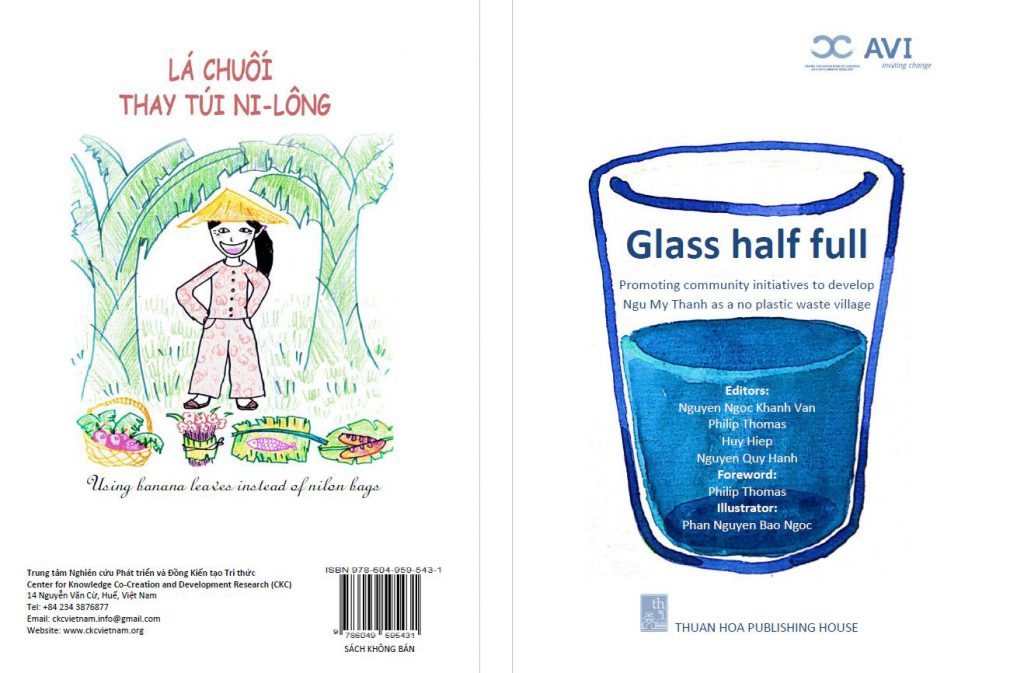
“Glass half full: Promoting community initiatives to develop Ngu My Thanh as a no plastic waste village” is a collection of sharing, discussions and practices by Ngu My Thanh villagers in developing a no plastic waste village model.
The publication has been produced as part of the Project “Empowering Women to Build a Strong and Sustainable Village” which was implemented from April 2019 to February 2020. The Project was funded by Australian Volunteers International (AVI) and implemented by the Center for Knowledge Co-creation and Development Research (CKC).
This publication presents messages about the significance of Tam Giang Lagoon environment and environmental protection measures, and introduces asset-based community development (ABCD) approaches to develop initiatives for building strong and sustainable communities. This publication also collected and illustrated single-use reduction initiatives by local village women such as ‘Using banana leaves instead of plastic bags’, ‘Turning waste into flowers’, ‘Community-based tourism without plastic waste’, and a local campaign to clean up the lagoon habitat. The initiatives help to raise public awareness and change local habits, and especially emphasise the role of women in reducing plastic waste in their own home, as well as their neighborhood and the village. Through this publication, CKC and the authors hope that the knowledge and experience shared during the seminars and the lessons learned from the community initiatives will be applied in different ways in different places.
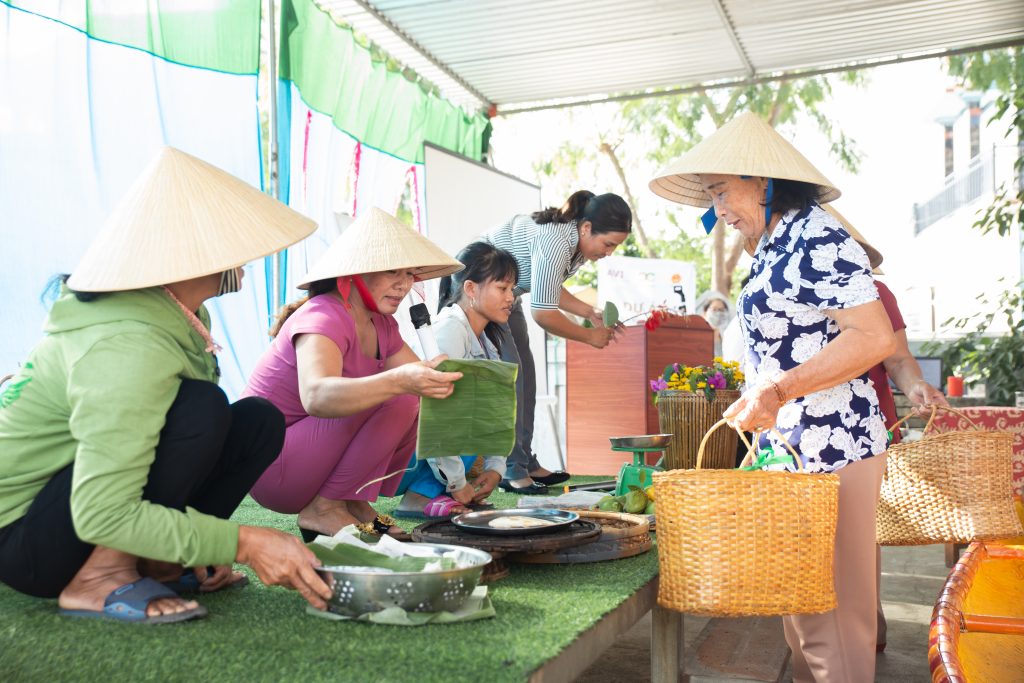
“What we saw at Ngu My Thanh is part of a bigger movement. Over the last few years Vietnam and the global community has become much more aware of the damage that single use plastics are doing to the world. This damage – especially to the marine environment – has become much more apparent as we see pictures of the Great Pacific Garbage Patch and remote island beaches littered by plastic waste, and as we hear that there are five bags full of plastic for every foot of coastline and that plastic waste kills 100,000 marine mammals every year. Slowly but gradually the countries of the world – and their provinces like Thua Thien Hue, and their villages like Ngu My Thanh – are taking action to slow down and reverse what we have been doing without thinking for so many decades.” Philip Thomas – CKC Business Mentor and a volunteer of the Australian Volunteers Program.
Hydropower dialogues: Open mind, Open heart, Open will is a collection of sharings, contributions and discussions by stakeholders from the Workshop on “Promoting dialogical social impact assessment and gender impact assessment for sustainable hydropower development in the Vietnam Central and Central Highlands”. The Workshop and the publication were initiated by three Australian alumni under the Australia Awards Scholarship program and funded by the Australian Government through the Australian Alumni Grants Fund.
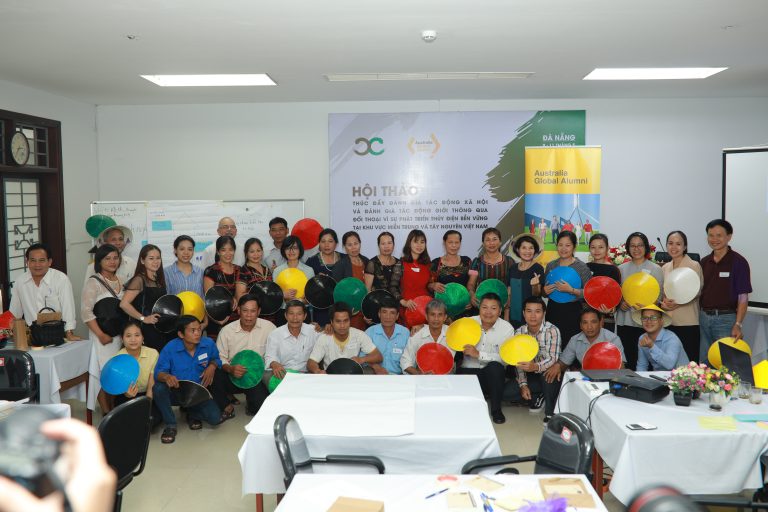
The Centre for Social Research and Development (CSRD) has worked with development partners and hydropower affected communities in Vietnam’s Central and Central Highlands Regions over the past 10 years. It has promoted social and gender impact assessments to bring out positive change for communities and relevant stakeholders. The Center for Knowledge Co-creation and Development Research (CKC) has used CSRD’s research results to promote a model for dialogues among stakeholders for social and gender impact assessments by conducting a three-day workshop from 9-11 May, 2019 at the Institute of Social Sciences of the Central Region, Da Nang city. This Workshop aimed to promote collaborative dialogue among stakeholders in social and gender impact assessments in hydropower development in the Vietnam Central and Central Highlands, and to strengthen support for the sustainable development of disadvantaged communities in these regions. The Workshop involved 40 participants from State agencies, institutes, research centers, hydropower companies, social organisations, and local communities from Dak Lak, Quang Nam, Thua Thien Hue and Quang Binh provinces.
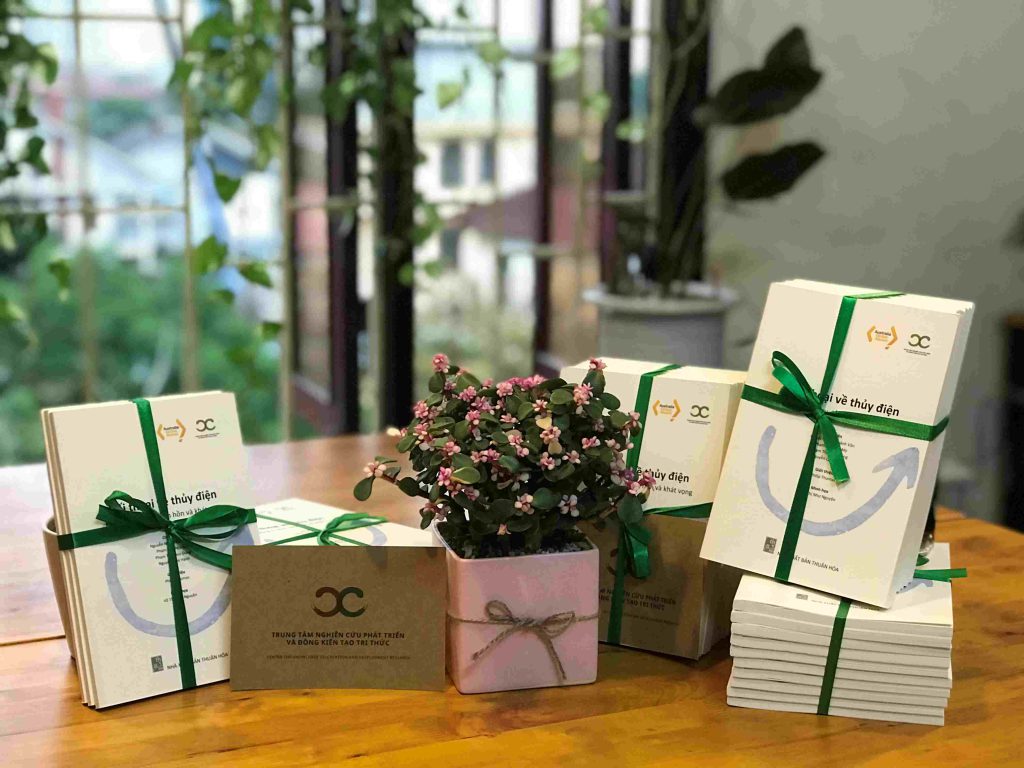
This publication conveys important messages from the Workshop. Stakeholders in hydropower projects should consider the social and gender impacts from hydropower project development using a multi-dimensional perspective to introduce creative solutions which minimise the negative impacts on affected communities. Local communities should develop community visions for the next 5-10 years which share common development goals and which mobilise the resources of public agencies, companies and communities to achieve sustainable development in the future. Progress requires effort, determination, and co working by the community and stakeholders with a transformative dialogue based on an open mind, open heart and open will.
CKC is a new organisation and we want to ensure that we meet with and understand other NGOs who share our values and who we may be able to co-work with as partners at some point. So CKC’s Director Mrs Van Nguyen and the Business Advisor, Mr Philip Thomas spent two days in Ha Noi in November visiting several international and local NGOs. We met with INGOs Oxfam, World Vision and Care International as well as Vietnamese NGOs WARECOD, SRD and iSEE.
We really appreciated their welcome to us and their interest in our work, and we were really impressed by the amazing contributions they have made to disadvantaged groups across Vietnam over many years. Whether it is empowering women, supporting ethnic minorities and LGBT groups, children and people with disabilities, it was a great reminder to us of how much the NGO sector has contributed to Vietnam’s development over many decades. With the changing funding environment, so many of these NGOs are showing creativity and resilience in how they respond to this changing scene – often by finding opportunities to work with the private sector where there are common values through their Corporate Social Responsibility (CSR) programs.
Thank you to all those Ha Noi NGOs who gave us time and shared their experiences with us.https://ceskalekarna247.com/prodej-zenska-viagra-bez-receptu-online/