
Women’s Role in the Bàng Grass Supply Chain in Phong Dinh Highlighted at the National Scientific Conference
- 21 November, 2026
- ckcvietnam
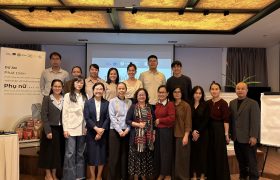
On 17 November 2026, the Center for Knowledge Co-creation and Development Research (CKC) presented its research titled “Bàng Grass Product Supply Chain: Opportunities and Barriers to Women-Led Green Tourism Development in Phong Dinh Ward, Hue City” at the National Scientific Conference “Developing Distinctive Agricultural Products for the Value Chain from Agricultural Production to Tourism,” organized by the Hue Union of Science and Technology Associations (HUSTA).
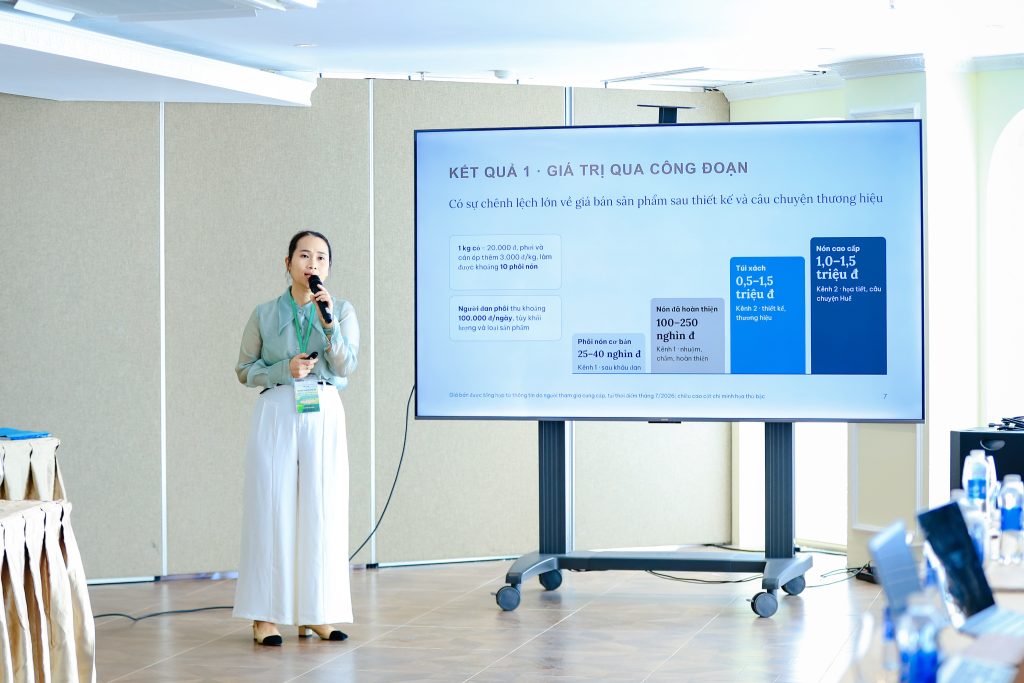
The study examines the bàng grass supply chain in Phong Dinh through the lenses of gender and green tourism, seeking to better understand its structure, the roles women play across the value chain, and opportunities for developing a more sustainable and inclusive tourism model.
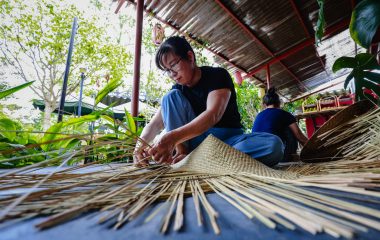
The findings show that the bàng grass (cỏ bàng) supply chain currently operates through two complementary channels. The traditional channel involves the majority of local households and focuses on producing everyday handicraft products. The second, enterprise-led channel emphasizes product innovation, improved design, and brand storytelling to create higher-value products and access broader markets.
Across both channels, women make up the majority of the workforce and play a central role in production and weaving activities. However, their participation in higher-value functions, such as product design, pricing, and market decision-making, remains limited. As a result, the economic benefits women receive often do not fully reflect their contribution to the supply chain. At the same time, the research highlights a promising trend: the chain’s leading enterprises are women-led. This shows that when women have access to skills development, resources, and market connections, they can successfully move into leadership and entrepreneurship roles that generate greater value.
From a green tourism perspective, the bàng grass value chain possesses significant strengths, including the use of natural materials, traditional handicraft techniques, and the rich cultural identity of the craft village. However, gaps remain in raw material zone planning, environmental management of dyes and wastewater, and the absence of visitor experiences. The chain therefore has the potential for green transformation, but it has not yet evolved into a fully integrated green tourism value chain.
Based on these findings, the study proposes three directions for fostering a greener and more gender-inclusive value chain:
- Promote sustainable raw material development through land-use planning and the introduction of environmental standards.
- Build women’s capacity to take on higher-value stages of the chain while piloting community-based visitor experiences centered on bàng grass weaving and local culture.
- Strengthen chain linkages among producers, enterprises, tourism stakeholders, and supporting sectors, with the long-term goal of building a shared regional brand for bàng grass products.
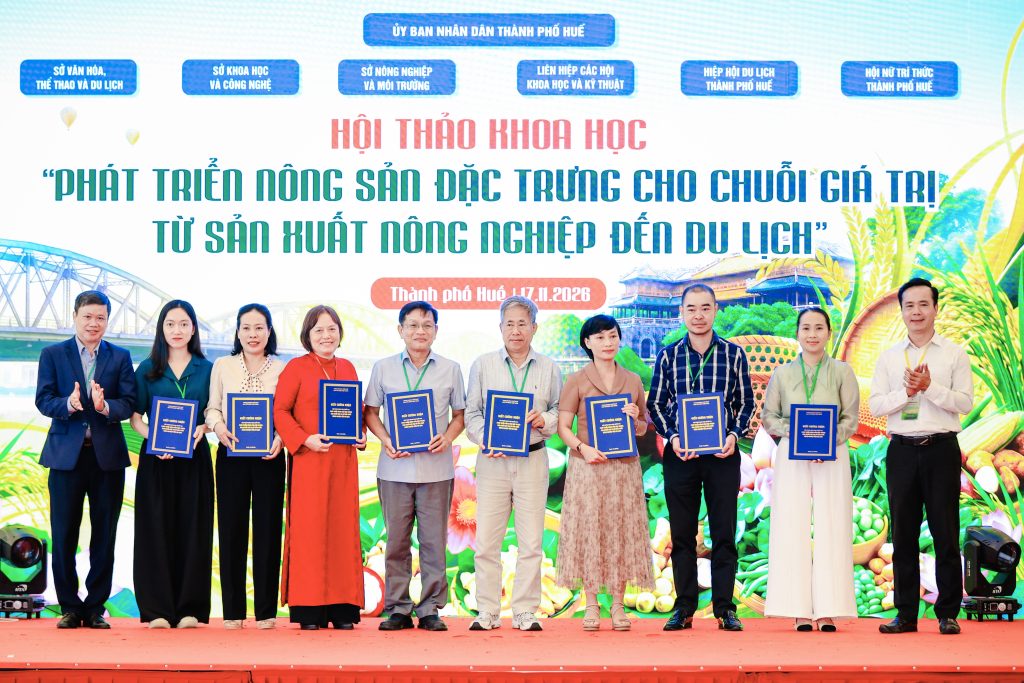
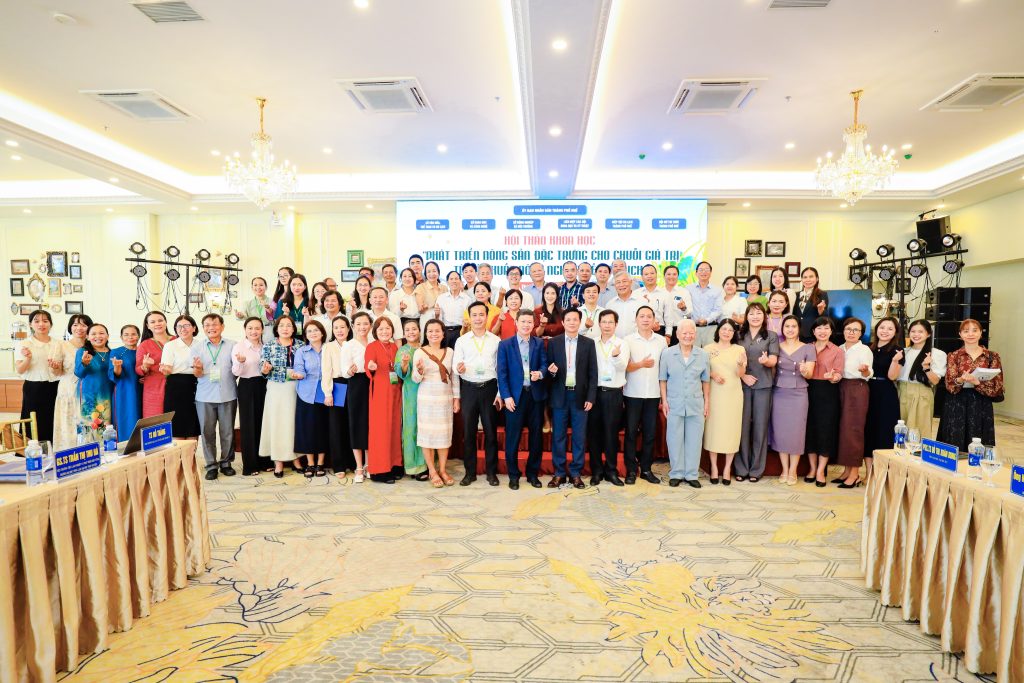
This research is part of the “Women-Led Development of Eco-Friendly Handicraft Supply Chains for Tourism and Services in Phong Dinh Ward, Hue City” (PWG-Phong Dinh) project, supported by the “Women-Led Green Transition” (PWG) project under the “Women-Led Green Partnership Program,” funded by the European Union and managed by Oxfam in Vietnam. The project is implemented by CKC in collaboration with the Phong Dinh Ward Women’s Union and Kido Company.
Photo: HUSTA
Recently News
Related Articles
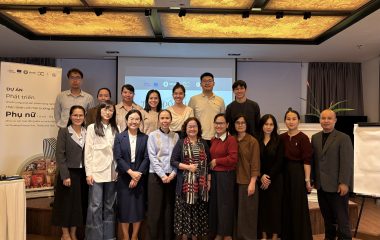
Co-interpreting and Validating Research Findings: Building Recommendations to Strengthen Women’s Access to Green Finance and Sustainable Craft Village Supply Chains | PWG-Phong Dinh Project
13 November, 2026
On November 11, 2026, CKC held a workshop titled “Sharing and co-interpreting research findings on women’s roles in accessing and using green finance in traditional handicraft supply chains linked to services and tourism in Phong Dinh Ward, Hue City”.
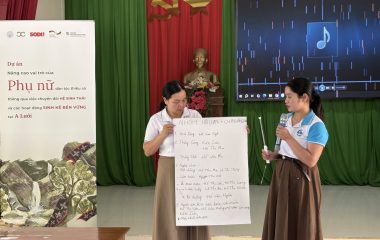
A Luoi women preserve cultural heritage and co-create an Indigenous Knowledge Handbook
12 November, 2026
On 1 and 3 November 2026, the SODI-A Luoi Project organized three training and sharing sessions on collecting indigenous knowledge stories in A Luoi 1, A Luoi 2 and A Luoi 3 communes. The sessions brought together 30 women participants,...
TÌM KIẾM ĐƠN VỊ CUNG CẤP DỊCH VỤ ĂN UỐNG – DỰ ÁN PWG-PHONG DINH
15 October, 2026
Trung tâm Nghiên cứu Phát triển và Đồng kiến tạo Tri thức (CKC) đang tìm kiếm đơn vị cung cấp dịch vụ ĂN UỐNG trong khuôn khổ Dự án “Phát triển chuỗi cung ứng sản phẩm làng nghề thân thiện với...
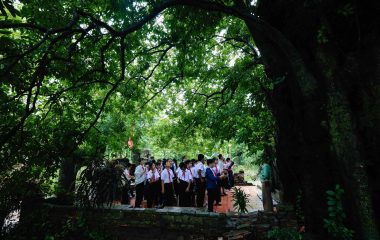
DISCOVERING PHONG DINH’S TRADITIONAL CRAFT VILLAGES: CONNECTING WITH LOCAL CULTURAL VALUES
6 October, 2026
Listen – See – Touch – Do: That is how 135 students explored the traditional crafts rooted in their own homeland. Last September, as part of the PWG-Phong Dinh Project, CKC, in collaboration with Nguyen Tri Phuong Primary and...
The Data Collection Cycle: Building Quality Datasets in the Field
4 October, 2026
In field research, every personal account, observation and photograph is a valuable piece of data that helps the research team better understand the community. To build a comprehensive and reliable dataset, CKC follows a continuous cycle of collecting: reviewing, clarifying,...
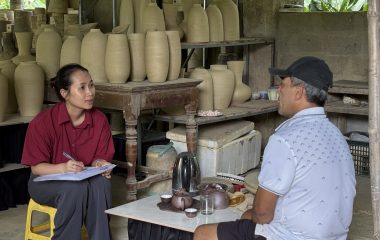
Field Survey: When Research Goes Hand in Hand with Community Development (PWG-Phong Dinh Project)
20 August, 2026
In early August 2026, CKC conducted fieldwork for the study “Women’s Roles in Accessing and Using Green Finance in Traditional Handicraft Supply Chains Linked to Service Development in Phong Dinh ward, Hue city.” The study uses a supply chain...
TÌM KIẾM ĐƠN VỊ CUNG CẤP DỊCH VỤ – DỰ ÁN PWG-PHONG DINH
10 August, 2026
Trung tâm Nghiên cứu Phát triển và Đồng kiến tạo Tri thức (CKC) đang tìm kiếm đơn vị cung cấp dịch vụ XE DI CHUYỂN VÀ TEA-BREAK trong khuôn khổ Dự án “Phát triển chuỗi cung ứng sản phẩm làng...
TÌM KIẾM ĐƠN VỊ CUNG CẤP DỊCH VỤ – DỰ ÁN PWG-PHONG DINH
4 August, 2026
Trung tâm Nghiên cứu Phát triển và Đồng kiến tạo Tri thức (CKC) đang tìm kiếm đơn vị cung cấp dịch vụ XE DI CHUYỂN VÀ TEA-BREAK trong khuôn khổ Dự án “Phát triển chuỗi cung ứng sản phẩm làng...
Planting Four-Season Bamboo – Sowing Green, Building a Protective Belt, and Creating Sustainable Livelihoods for the A Luoi Community
30 July, 2026
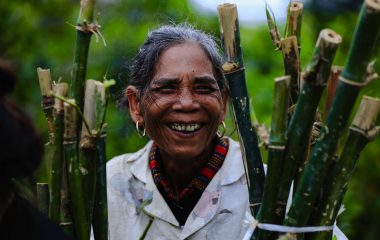
From July 14 to 16, 2026, more than 3,800 four-season bamboo seedlings and 11 tons of fertilizer were distributed to 92 households living in landslide-prone areas along rivers and streams in A Luoi 1, A Luoi 2, and A Luoi...
Supporting a Sedge Pressing Machine: Advancing Technological Innovation towards a green, women-led craft village (PWG-Phong Dinh Project)
24 July, 2026
On 10 July 2026, under the framework of the PWG-Phong Dinh Project, CKC, in collaboration with the Phong Dinh Ward People’s Committee, the Phong Dinh Ward Women’s Union, and local partners, officially handed over the sedge pressing machine to the...